

Sitting 8+ Hours a Day: What the Research Says and How to Build a Smarter Workstation
Introduction
For many knowledge workers, an 8-hour workday is really an 8-hour sitting day. Add commuting, meals, and evening screen time, and it's easy to spend more than half of your waking hours seated.
That doesn't mean desk work is doomed to damage your health. But it does mean the total amount of uninterrupted sitting is worth paying attention to — and that small, consistent changes to how you work can make a real difference.
This article breaks down what prolonged sitting actually does to the body, what the long-term risks are, and how to design a workstation that keeps you moving instead of locked into one position all day.
What Happens to Your Body When You Sit All Day
1. Spinal load and posture drift
Sitting places more load on your lower back discs than standing does. As the day goes on, posture tends to slouch, which rounds the upper back, pushes the head forward, and tightens the hips. Even a well-designed chair can't fully cancel out the strain of staying in one fixed position for hours.
2. Slower blood circulation
When your legs stay bent and still for long stretches, blood flow slows — especially in the lower body. That can leave your legs feeling heavy or swollen by evening. In more serious cases, prolonged immobility is associated with a higher risk of blood clots, including deep vein thrombosis.
3. Muscle stiffness
Hip flexors, hamstrings, and the muscles around the shoulders and neck shorten and tighten when they're not used through their full range. That's why standing up after a long meeting can feel unexpectedly stiff.
4. Fewer calories burned
Sitting burns far fewer calories than standing or moving. Combined with more snacking and less overall activity, a sedentary day can shift your energy balance in a way that makes weight gain more likely — even without any change in diet.

Long-Term Health Risks Linked to Prolonged Sitting
Beyond daily discomfort, regularly sitting for most of the day is associated with several chronic conditions.
| Health Area | What the Research Suggests |
|---|---|
| Heart disease | Long sitting stretches are linked to unfavorable changes in blood pressure, blood sugar, and blood fats — all established cardiovascular risk factors. |
| Type 2 diabetes | Muscle contraction helps the body use insulin efficiently. Hours of stillness slow that process, so blood sugar is cleared less effectively. |
| Chronic back pain | Daily sitting without much posture variation can turn occasional stiffness into persistent lower back pain. |
The World Health Organization notes that people who don't get enough physical activity face a meaningfully higher risk of early death — and high amounts of sedentary time are a significant contributor.

Warning Signs You're Sitting Too Much
Your body usually gives signals before a sedentary routine becomes a bigger problem:
-
A dull ache in the lower back or neck by mid-afternoon
-
Legs that feel stiff, heavy, or swollen after work
-
Noticeably tight hips when you finally stand up
-
Persistent fatigue that doesn't match how active your day actually was
None of these necessarily point to something serious, but they're worth addressing early.
How to Reduce the Risks Without Quitting Your Desk Job
The good news: most of these risks can be meaningfully reduced without giving up desk-based work.
1. Take movement breaks every 30–60 minutes
This doesn't need to be a workout. A short walk to refill a water bottle, a few minutes of stretching between tasks, pacing during a phone call, or taking the stairs instead of the elevator all help. Small, frequent breaks support circulation better than one long walk at the end of the day.
2. Stretch the muscles that sitting tightens
Target the hip flexors, hamstrings, chest, and shoulders. A few minutes in the morning and again in the mid-afternoon can noticeably change how your body feels by evening.
3. Fix your posture setup
Keep ears, shoulders, and hips roughly aligned. Put your screen at eye level and your feet flat on the floor. Small adjustments — moving the monitor closer, raising the chair slightly — often make a bigger difference than expected.
4. Add a sit-stand or multi-posture setup
The core problem with sitting for hours isn't sitting itself — it's the absence of change. A setup built around multiple postures makes it easier to shift position without interrupting your workflow.
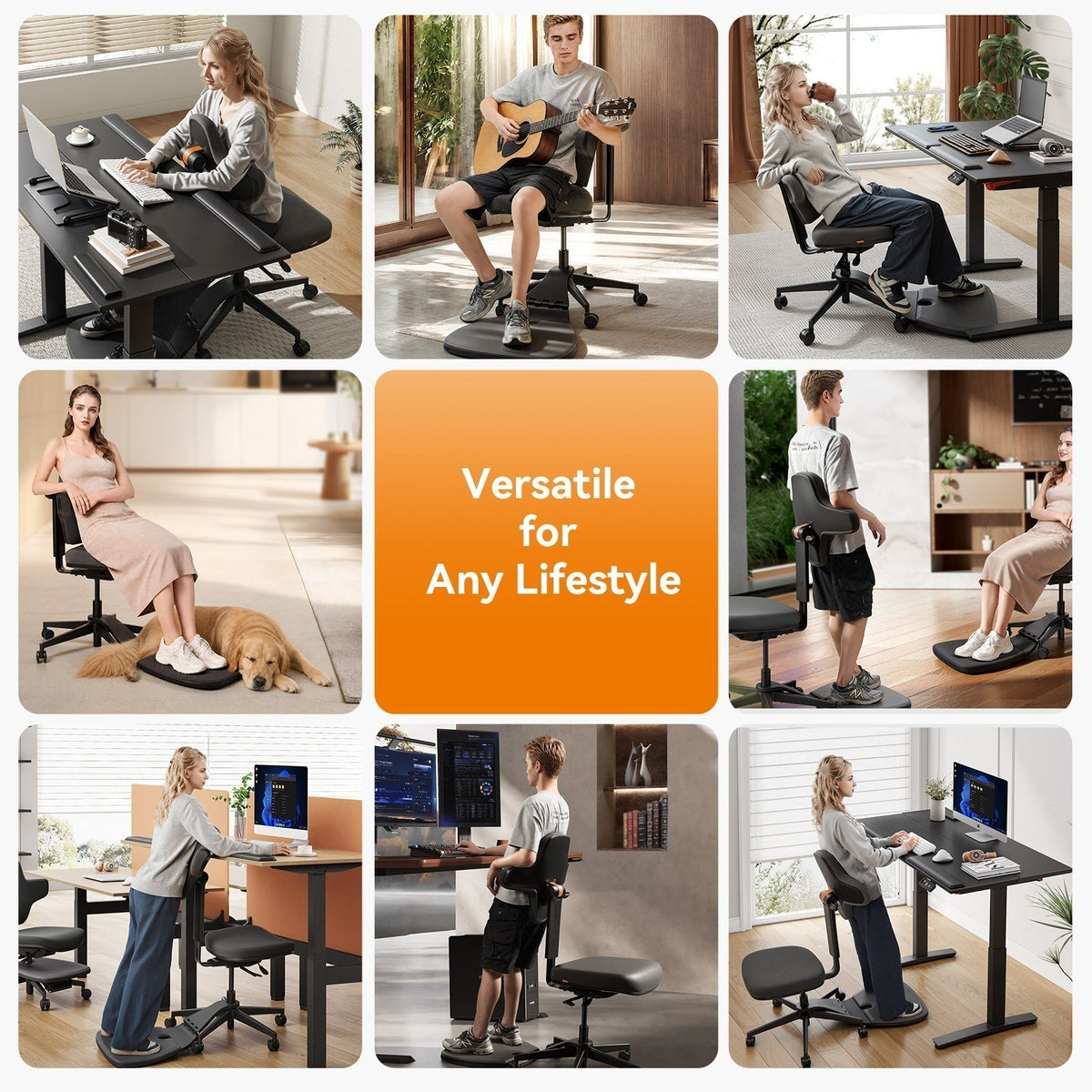
For example, the Newtral Standing-Mate Chair is designed around this idea, with six working positions including straddle sitting, leaning, perching, upright sitting, reclining, and chest-supported standing. It also includes a built-in anti-fatigue pad and is tested to BIFMA, SGS, and TÜV standards. You can read more about Newtral's perspective on sitting risks here.
5. Choose a chair built for long sessions
For the hours you do spend seated, the chair matters more than most people realize. Look for:
-
Adjustable lumbar support that moves with your body
-
Seat depth that matches your leg length
-
Breathable seat material
-
Smooth height and recline adjustments
-
Testing against recognized furniture safety and durability standards, such as BIFMA
A chair with auto-following lumbar support, like the Newtral NT002 Ergonomic Office Chair, adjusts in real time as your posture shifts, keeping your lower back supported instead of letting a slump set in.
Completing the Setup: Why the Desk Matters Too
A chair alone only solves half the equation. To actually reduce total sitting time — not just sit more comfortably — the desk needs to move too.
The Newtral DE-A Smart Electric Tilt Standing Desk adjusts electrically from 29.5 to 48.03 inches, covering everything from seated working height to full standing. Its 15-degree tilting front surface keeps wrists at a more natural angle during typing or writing, and a smart controller with memory presets saves up to three preferred height and tilt combinations.
Paired with a chair like the Standing-Mate, the desk and chair together create a workstation that supports continuous movement throughout the day instead of forcing a single fixed posture.
Which Setup Fits Your Work Pattern?
Not every workday looks the same, so the right setup depends on how much of it you spend sitting still versus moving between positions.
| Consideration | Sit-Stand Setup (Standing-Mate) | Seated Ergonomic Chair (NT002) |
|---|---|---|
| Best suited for | Frequent posture changes throughout the day | Long stretches of focused seated work |
| Posture options | Six positions, including standing and straddle sitting | Upright seated support with recline |
| Lumbar support | Adjusts across leaning, sitting, and standing | Auto-following support while seated |
| Added feature | Built-in anti-fatigue standing pad | Built-in footrest |
Workers who alternate frequently between tasks tend to benefit most from a sit-stand setup. Those who stay focused at a desk for most of the day may prioritize deep seated support instead.
Bottom Line
Sitting for eight or more hours a day is common, but it doesn't have to come at the cost of long-term health. Regular movement breaks, better posture habits, and equipment built to support multiple positions can meaningfully reduce the risks discussed above.
Small, consistent changes tend to matter more than any single fix. Start with one habit — a standing break every hour, or a properly adjusted chair — and build from there.
FAQs
Is sitting 8 hours a day bad?
Sitting for eight hours in one continuous stretch, without breaks, is generally considered unhealthy — especially when it happens most days. The bigger factor is how uninterrupted the sitting is, not just the total hours.
How many sitting hours is unhealthy?
There's no single official cutoff, but public health research generally treats around eight or more hours of total daily sedentary time as a threshold where risk starts climbing.
Can an ergonomic chair help?
Yes — it can meaningfully reduce strain on the back and neck. But no chair fully eliminates the risks of prolonged sitting on its own. It works best combined with movement breaks and, where possible, a sit-stand routine.
How often should you stand up?
The 30–60 minute range is a widely cited benchmark, but consistency matters more than the exact interval. Standing on a predictable schedule — not just when discomfort sets in — is what keeps circulation and stiffness in check.
What's the best way to sit for long work hours?
Combine a supportive, adjustable chair with regular posture changes and movement breaks. Alternating between sitting and standing throughout the day tends to produce the best results for both comfort and long-term health.